There are some gardeners who rest in winter, and then there are gardeners who are just as busy in winter as in any other season. Here in Zone 6b, even though there’s not much to do outside right now, I’m not exactly taking a break. For me, winter is a time to review, plan, organize, and prepare so I’m ready to go when spring rolls around again.
Looking back on 2022, there were clearly some stand-out performers in my garden, some pleasant, even if unexpected, surprises, and definitely a few overachievers that picked up the slack where others failed. I like to try new varieties every year, I’m still very much in the experimentation phase, learning how different types of plants grow here, but when I find one that performs well, I’ll stick with it. At least that way I know, if all else fails, I can rely on these to fill in the space. Here’s a recap of those plants, a mix of flowers and veggies, that I’ll be growing again in 2023, and highly recommend you give them a try!
Black Prince Snapdragons – I have a newfound love for snapdragons. Until I found Black Prince, I always thought of snapdragons as what I call “grandma plants”. Nothing against grandmothers but, you know, there are some pretty typical (read boring) choices you find in grandma’s garden: hydrangeas, roses, mums, petunias, geraniums…snapdragons. But this is not your typical snapdragon! Black Prince is quite possibly my favorite flower, period. The rich velvety merlot color, sometimes with a hint of purple, is something I’ve never seen in any other flower, and satisfies my desire to incorporate red in the garden while avoiding the hot toned orangey-reds that clash with everything else. An heirloom variety, these have been some of the hardiest and hardest-working flowers in my garden, reliably perennial for 3 years now. They flower from early spring, right on through the summer into late fall/early winter, and the more established ones even stay evergreen through the snow. The next year they come back bushier than before, and require no maintenance unless I decide to control their shape with a light pruning. I started the first year from seeds from Botanical Interests, and keep going with the seeds I save every fall. It looks like Botanical Interests no longer carries Black Prince (although they do have its cousin, Night and Day) but I have seen them now being sold by Baker Creek, if you’re looking for a source.
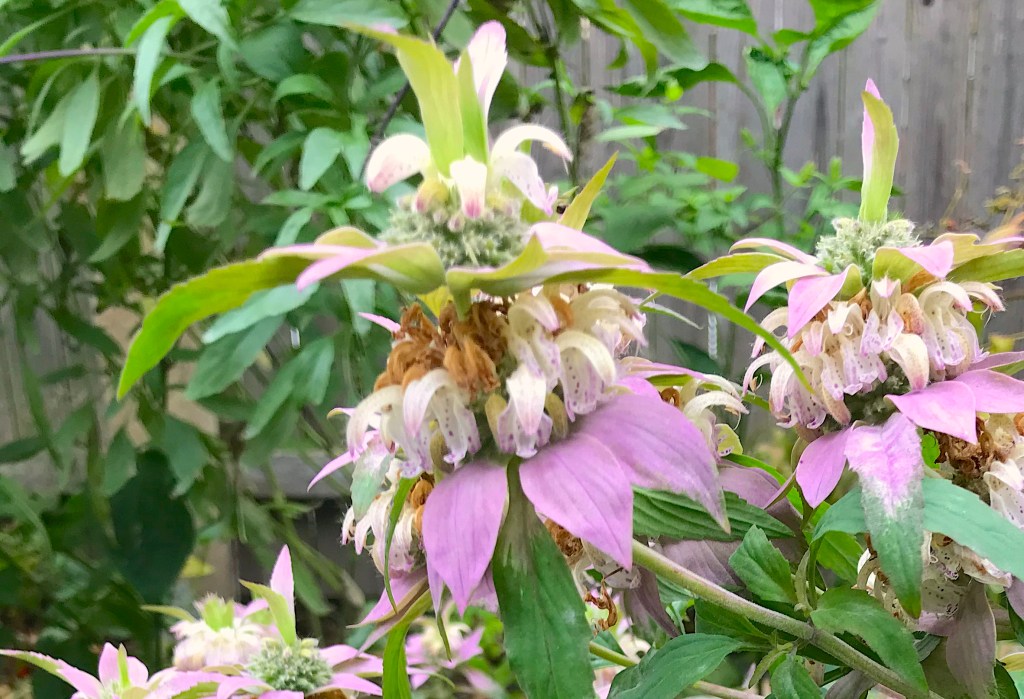
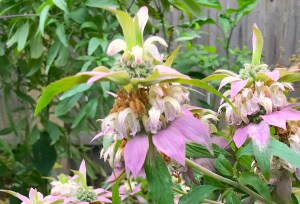
Spotted Bee Balm – If you care about including native plants in your garden to support the pollinators, this one should be at the top of your list. (For most of the U.S. and Canada, but always do your research first.) Super easy to start from seed, fast growing and blooms the first year if started early indoors. This is the wild relative of the many kinds of cultivated bee balms you see available from nurseries, but with way more resistance to powdery mildew. It has beautifully unique flowers that are a light lilac purple with pale yellow centers and maroon freckle spots. The bees absolutely love them, in fact many species of bees in North America have co-evolved with this plant. While general information says it can grow about 3-4 ft., I’ve found that it seems to be right at home in my less than optimal clay soil and each one has grown into the size of a small shrub, the biggest pushing 5 ft. in its first year. I don’t know if I’ll actually grow more of these, only because I’ve run out of places to put them, but you can bet if I open up more space in the yard, I will be adding more spotted bee balm. Source: American Meadows
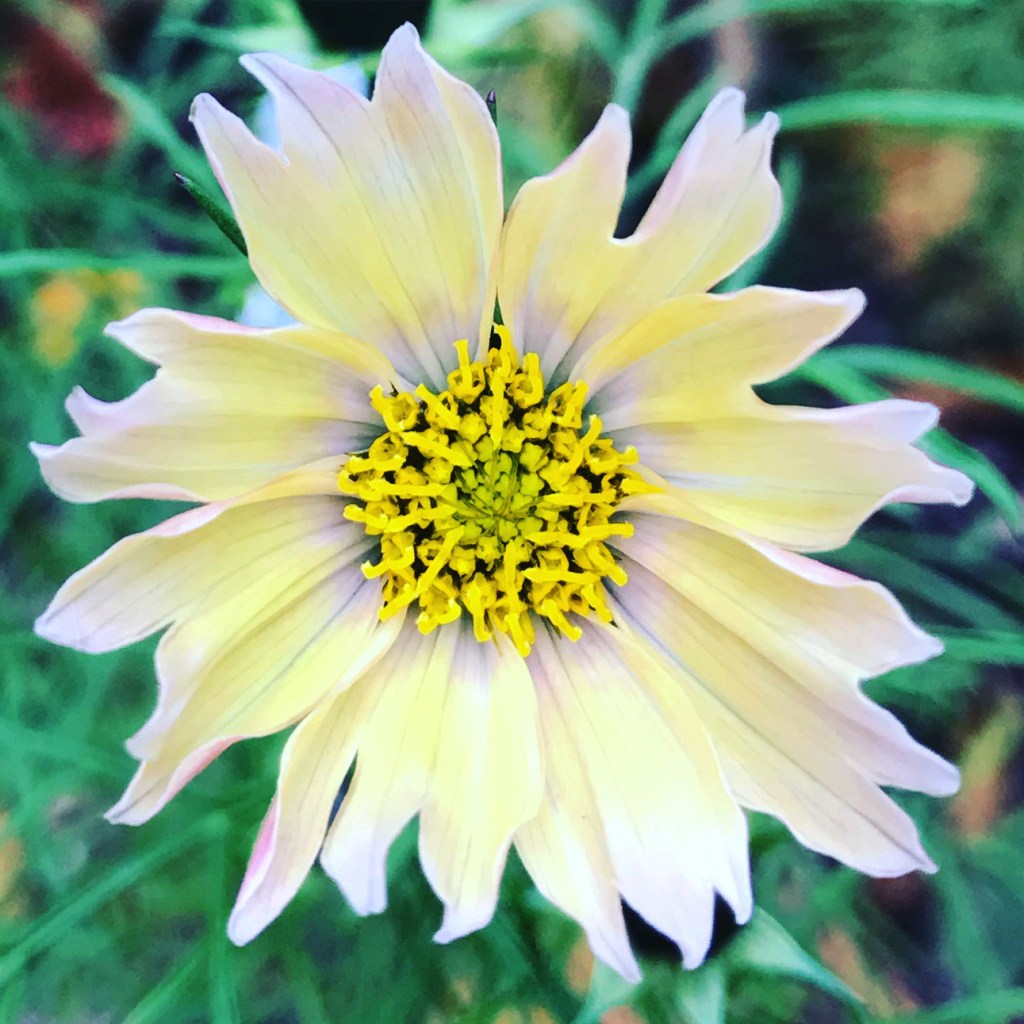
Apricot Lemonade Cosmos – I started these from seed late in the summer, and planted them out in September to fill an empty space in the garden. They just started to flower a few weeks before our first frost, so I didn’t really get a chance to enjoy them last year. But I could tell from the few flowers that they are the palest light yellow tinged with pink, it’s exactly the unobstrusive shade of yellow I’ve been looking for, so I’ll be growing these again, and of course starting earlier so I can enjoy them all summer. Source: Baker Creek
Blaze of Fire Salvia (splendens) – The first year we planted these, I let my partner pick them out at the nursery, as a compromise after having turned down all of his other choices. He tends to like bright, bold and hot colors in shades of yellow, orange, and red, which is pretty much the exact opposite of my preference for cool pastel shades of pink, purple, and blue. (It’s a testament to our relationship that we survived plant shopping together!) This bright red flower is typically not something I would pick out, but it kind of works where we put it, at the front edge of a darker corner along the fence, where it gets just enough sun to thrive, but is somewhat muted by the shade behind it, creating a very nice highlight in that spot with just the right pop of color. Like pretty much all salvias, I’ve found it self-seeds readily the following year, although I wouldn’t call it aggressive, and if I don’t like where it pops up, I just transplant the seedlings somewhere else. The hummingbirds visit it every morning and evening like clockwork, and take their time going to each and every flower. For that reason alone I will always find a way to fit this blazing red salvia somewhere in the garden. Source: Eden Brothers
Vanilla Ice Sunflowers – Confession, I’m not a big fan of sunflowers, or at least not the typical sunflower that comes to mind. But my partner loves them, so I keep looking for varieties of sunflowers that would appeal to both of us, and I think this is our goldilocks. Yellow, but not too yellow! Tall, but not too tall! Flowers profusely, but the thin stems and smaller leaves give it a light, airy quality, which is especially lovely seeing them sway in the breeze. Bonus: attracts lots of birds, we’ve seen more goldfinches hanging around since planting these. Source: Botanical Interests
Midnight Blend Impatiens – This is more of a budget-conscious choice. It’s easy enough to pick up a flat of impatiens at the local garden center. But for $3 I can grow all the impatiens I have space for. The color selection of this particular mix blends really well with the rest of my garden, and helps to tie in that bright red of the Blaze of Fire Salvia with the other pinks and purples I lean towards. I’ve found these to be fairly easy to grow from seed, and in a pinch I’ve discovered I can propagate more from stem cuttings. Source: Botanical Interests
Everleaf Emerald Towers Basil – By far the easiest and most prolific basil I have ever grown. No matter how much I harvest, it never seems to diminish in size. I’d say it’s fairly mild in flavor, a nice compliment or substitute for Italian Genovese basil. I grow both, but for some reason the Genovese basil seems to attract more pests, if I grow it outside it often gets nibbled down to the stem, but this basil hasn’t had those problems. It also makes a really nice ornamental addition to mixed containers. Source: Botanical Interests
Dwarf Greek Basil – Also super easy to grow from seed, and ready to harvest quicker than the larger basil varieties. This one has a good measure of spiciness to it, which is excellent to add a little zip to tomato-based sauces and soups. Another great addition to container plantings, especially if you’re short on space or like the look of miniature fairy-garden type plants. A natural combination with compact bush tomatoes. Source: MIGardener
Clementine Tomato – Prolific, cocktail-sized cherry tomatoes that ripen from a light sunny yellow to a deep citrusy orange. Sweet and not too acidic. If you’re a fan of the smaller Sungold tomatoes, but wouldn’t mind something a little bigger, give these a try. Also worth nothing: these seemed less prone to the septoria leaf spot and powdery mildew that my tomato plants always struggle with towards the end of summer. Source: Johnny’s Seeds
Gardener’s Delight Cherry Tomato – My go-to standard cherry tomato. I suppose I could try other kinds, but if it ain’t broke, why fix it? I’ll still experiment with growing different kinds of tomatoes, but these are so reliable, I think they’ll always be a staple in my garden. I actually didn’t have to plant these last year, they re-seeded from a few fallen tomatoes, and I just let them do their thing. Last winter I even grew one of these from a cutting, indoors in a sunny window, and hand-pollinated the flowers with a q-tip. Much to our endless amusement and delight, we had home-grown tomatoes all winter. Source: Botanical Interests
Pimento L Peppers – Sweet little snack-sized peppers, actually will grow as big as a bell pepper if you let them. I found these plants to produce a lot more than any other peppers I grew, even though they were started at the same time and had all the same growing conditions. I’m attempting to overwinter some indoors, and will also start new ones from seed, to make sure I have these again next year. Source: MIGardener
Fairy Tale Eggplant – Two years ago, I had no success growing eggplant from seed, I think I drowned them with too much love (and water) as is my helicopter plant-parenting tendency. Last year, I learned from that mistake and really had to restrain myself from overwatering, but I successfully grew two different types of eggplant, a larger Italian Long Purple Eggplant grown in-ground, and these smaller Fairy Tale Eggplant in containers, with the above mentioned Emerald Towers Basil. Both did quite well, although the larger eggplants had kind of exhausted themselves by the end of the summer, while these continued producing into November. The compact plants are great for space-saving in smaller gardens or containers, mine haven’t required any kind of staking or support, and who doesn’t love a low-maintenance plant? Source: Johnny’s Seeds
* This post was not sponsored by any of the seed vendors linked here, just sharing those sellers I’ve had good experiences with purchasing seeds from.
 Robinwood Garden
Leave a comment